

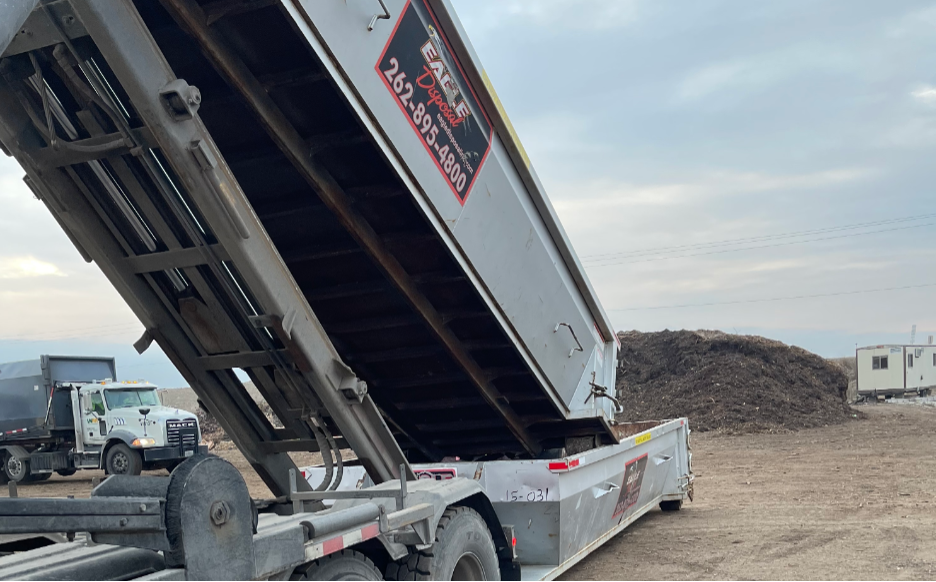

A roll-off dumpster can only be hauled when it is within safe weight limits — even if it still has space inside. This weight limit makes it very important for homeowners and contractors to understand how much weight a dumpster can safely hold before starting a project.
Below, this dumpster rental contractor in Racine, Wisconsin is going to explain how weight limits apply to 15, 20 and 30 yard roll-off dumpsters. We will also highlight some of the most important details you should know before you begin loading the dumpster.
Why do roll-off dumpsters have weight limits?
Safety regulations and legal requirements are why dumpster weight limits exist. Although people usually choose roll-off dumpsters based on size, weight is the more critical factor.
Trucks can only carry a certain amount of load on public roads due to federal and state transportation regulations because an overloaded dumpster could be unsafe to transport. On top of that, disposal facilities charge based on the total weight of each load. Therefore, heavier waste can increase your costs or require multiple trips.
Every professional dumpster rental contractor in Racine, Wisconsin must follow strict hauling and disposal regulations for this reason. Staying within established weight limits also keeps your disposal costs predictable and prevents overage fees after the dumpster is picked up.
What types of waste materials add the most weight?
Not all waste materials weigh the same, even when they take up similar amounts of space in a dumpster. Material density (not only volume) directly influences weight, which is why some loads reach their weight limit long before the dumpster looks full.
Extremely dense materials like concrete, asphalt paving, brick, ceramic, roofing and dirt add weight very quickly. Even small quantities of these materials can increase the total load and make it easy to exceed weight limits with only partial visual fill. Heavy waste can require contractors to recommend special dumpster sizes or disposal plans.
Wet waste can also weigh substantially more than the same materials when dry, which further increases the risk of exceeding allowable limits.
What are the weight limits for common roll-off dumpster sizes?
A standard 15-yard roll-off dumpster allows up to 2 tons of general household and mixed construction waste. Eagle Disposal also offers a 15-yard clean concrete dumpster with no tonnage cap when customers use it exclusively for approved clean concrete materials.
A 20-yard roll-off dumpster generally has a 3-ton weight limit, which makes it a good option for medium-sized renovation projects. The 30-yard roll-off dumpster can hold up to 4 tons and is the best option for managing large volumes of waste.
How can you avoid going over a roll-off dumpster’s weight limit?
Separating heavier materials from lighter waste is one of the best ways to keep a roll-off dumpster within its weight limits. Doing so distributes waste weight more effectively and reduces the risk of overloading a single dumpster.
Asking questions before loading the dumpster and monitoring what goes inside throughout the project can also reduce the risk of exceeding approved weight limits. An experienced dumpster rental contractor in Racine, Wisconsin can recommend the appropriate roll-off dumpster size or special handling options for dense or heavy waste materials.
Looking for a dumpster rental contractor in Racine, Wisconsin?
Are you worried about exceeding dumpster weight limits on your next project? If so, you can always consult with a professional dumpster rental contractor in Racine, Wisconsin — like Eagle Disposal. We can help you choose the right dumpster and manage your waste safely. Contact us today to request a free estimate or get in touch with our staff.
0 Comments